


Hey there! As a supplier of reagent bottles, I often get asked about the capacity range of these essential lab tools. So, I thought I'd write this blog to share all the ins and outs of reagent bottle capacities.
Reagent bottles come in a wide variety of capacities to meet different needs in laboratories, research facilities, and even in some industrial settings. The capacity of a reagent bottle can range from as small as a few milliliters to several liters. Let's take a closer look at the common capacity ranges and where they're typically used.
Small - Capacity Reagent Bottles (1 - 50 ml)
These tiny reagent bottles are super handy when you're dealing with precious or highly concentrated reagents. They're often made of high - quality glass or plastic, like borosilicate glass or polypropylene.
For example, in a biotech lab, you might use a 10 - ml reagent bottle to store a special enzyme solution. Since enzymes are usually expensive and used in small quantities, a small - capacity bottle helps to keep them well - preserved. Also, in educational labs where students are conducting small - scale experiments, these small bottles are great for holding small amounts of chemicals.
Medium - Capacity Reagent Bottles (50 - 500 ml)
This capacity range is probably the most commonly used in laboratories. A 125 - ml reagent bottle can be used to hold a standard buffer solution, which is used in many biological and chemical experiments. The 250 - ml and 500 - ml bottles are also very popular. They're large enough to store a decent amount of reagents, but still small enough to be easily handled and stored on lab shelves.
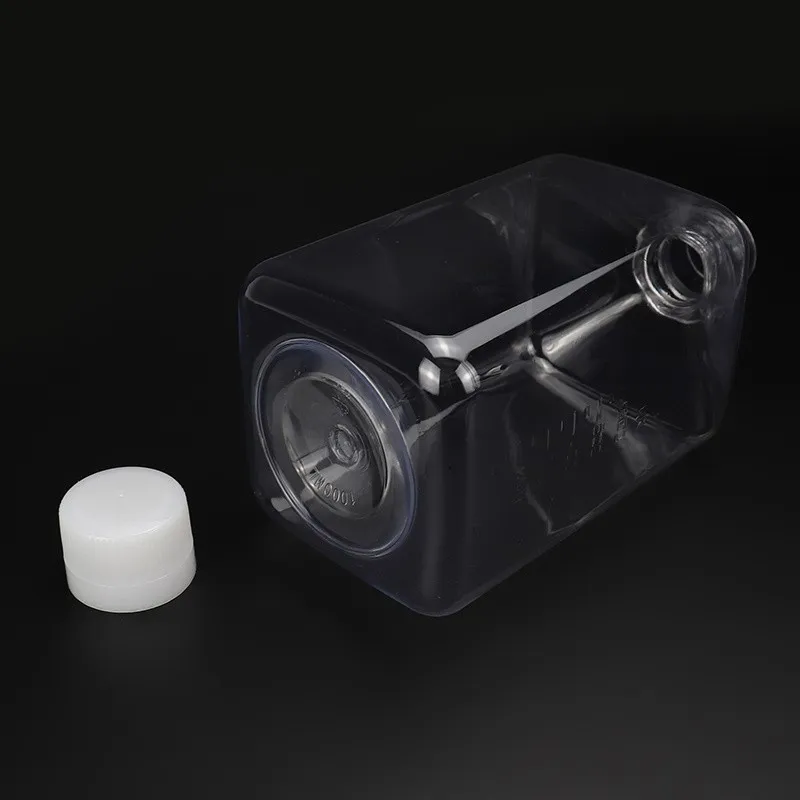

If you're running a chemistry lab, you might use a 250 - ml reagent bottle to store hydrochloric acid. It's a common acid used in various chemical reactions, and having it in a medium - sized bottle allows for easy pouring and dispensing. And if you're in a microbiology lab, a 500 - ml bottle could be used to hold a nutrient broth for growing bacteria.
You can check out our 125ml 250ml 500ml 1000ml Reagent Bottle options on our website, which offer high - quality bottles in these popular medium capacities.
Large - Capacity Reagent Bottles (500 ml - 5 liters)
When you need to store large quantities of reagents, these big bottles come in very handy. For instance, in an industrial laboratory where large - scale chemical synthesis is taking place, a 1 - liter or 2 - liter reagent bottle might be used to hold a common solvent like ethanol.
In a water treatment plant laboratory, a 5 - liter reagent bottle could be used to store a large volume of a water - testing reagent. These large - capacity bottles are usually made of durable materials to withstand the weight and volume of the reagents they hold.
Extra - Large - Capacity Reagent Bottles (5 liters and above)
Although not as common as the smaller and medium - sized ones, extra - large reagent bottles are used in some specialized industries. For example, in a chemical manufacturing plant, they might use 10 - liter or even 20 - liter reagent bottles to store raw materials or intermediate products.
The choice of the capacity of a reagent bottle depends on several factors. First of all, it depends on the amount of reagent you need to store. If you're just doing small - scale research, you don't need a huge bottle. Second, it depends on how often you use the reagent. If you use it frequently, a medium - sized bottle might be more convenient. And third, it depends on the stability of the reagent. Some reagents are more stable in smaller bottles because they're less exposed to air and light.
When it comes to the material of the reagent bottle, glass is a popular choice because it's inert to many chemicals and can withstand high temperatures. Plastic bottles are also widely used, especially for storing aqueous solutions. They're lighter, cheaper, and less likely to break.
We, as a reagent bottle supplier, offer a wide range of capacities to meet all your needs. Whether you're a small research lab or a large industrial facility, we've got the right reagent bottles for you. Our bottles are made of high - quality materials to ensure the safety and stability of your reagents.
If you're in the market for reagent bottles, don't hesitate to reach out to us. We can provide you with detailed product information, samples if needed, and competitive prices. We understand that every lab has different requirements, and we're committed to helping you find the perfect reagent bottles for your specific situation.
So, if you have any questions about the capacity range of reagent bottles or want to discuss your procurement needs, just drop us a message. We're here to assist you in making the best choice for your laboratory.
References
- "Handbook of Laboratory Glassware and Plasticware"
- "Laboratory Reagent Management Guide"


