


As a supplier of drop bottles, I've had numerous discussions with customers about the accuracy of drops from a drop bottle. This topic is of great significance, especially in fields such as chemistry, biology, and medicine, where precise liquid dispensing is often required. In this blog, I'll delve into the factors that affect the accuracy of drop bottle drops and share some insights based on my experience in the industry.
Factors Affecting Drop Accuracy
Viscosity of the Liquid
One of the most critical factors influencing drop accuracy is the viscosity of the liquid being dispensed. Viscosity refers to a fluid's resistance to flow. Liquids with high viscosity, like honey or glycerol, tend to form larger and less consistent drops compared to low - viscosity liquids such as water or ethanol.
When a high - viscosity liquid is drawn into a drop bottle, it adheres more strongly to the inner walls of the dropper. As a result, when the liquid is released, the drops may not break off cleanly. Instead, they can form long, stringy tails or coalesce with other drops, leading to inaccurate dosing. For example, in a laboratory setting, if you're trying to dispense a high - viscosity reagent using a standard drop bottle, you might find that the volume of each drop varies significantly from one drop to the next.
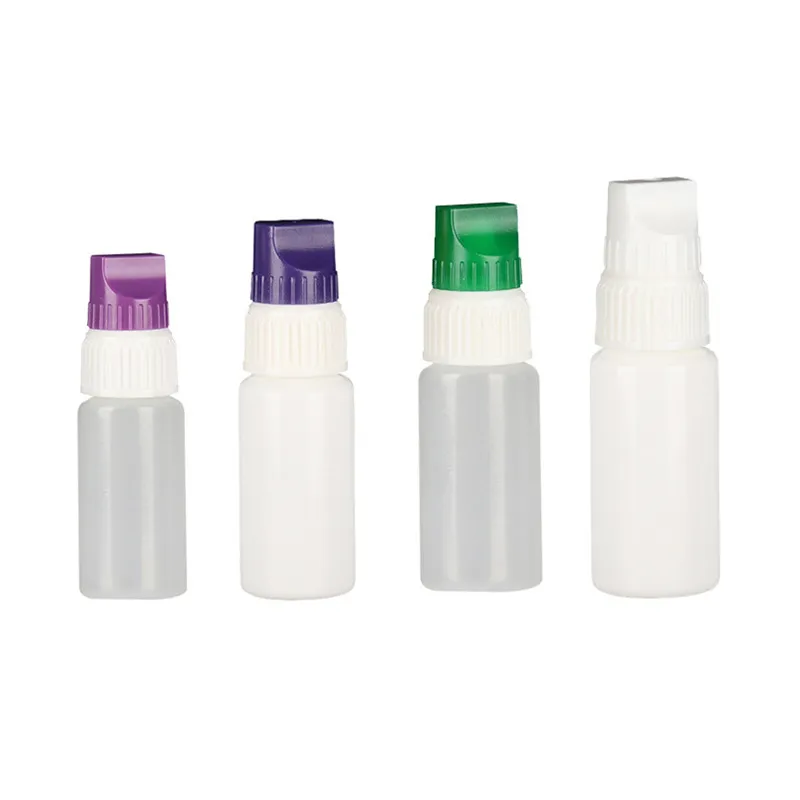

On the other hand, low - viscosity liquids flow more easily through the dropper tip. They break off more cleanly, resulting in relatively consistent drop sizes. However, even with low - viscosity liquids, there can still be some variation due to other factors.
Design of the Drop Bottle
The design of the drop bottle itself plays a crucial role in drop accuracy. The size and shape of the dropper tip are particularly important. A dropper tip with a larger opening will generally produce larger drops, while a smaller opening will result in smaller drops.
The length and internal diameter of the dropper also matter. A longer dropper can increase the pressure on the liquid column, which may affect the size of the drops. Additionally, the smoothness of the inner surface of the dropper can impact the flow of the liquid. Rough surfaces can cause turbulence and irregular drop formation.
Some drop bottles are designed with special features to improve accuracy. For instance, Reagent Dropper Bottle often have precision - engineered dropper tips that are designed to produce consistent drop sizes. These bottles are commonly used in scientific research and pharmaceutical applications where accuracy is of the utmost importance.
Pressure Applied
The pressure applied when squeezing the dropper bulb is another factor that can affect drop accuracy. If too much pressure is applied, the liquid may be forced out too quickly, resulting in large, irregular drops. Conversely, if too little pressure is applied, the drops may be very small or may not form at all.
Consistency in the pressure applied is key to achieving accurate drops. In a laboratory environment, trained technicians are often required to use a specific technique to ensure that the pressure applied to the dropper bulb is consistent from one drop to the next. However, in less controlled settings, such as in a home or school laboratory, it can be challenging to maintain this consistency.
Environmental Conditions
Environmental conditions, such as temperature and humidity, can also have an impact on drop accuracy. Temperature affects the viscosity of the liquid. As the temperature increases, the viscosity of most liquids decreases, which can lead to changes in drop size. For example, a liquid that forms consistent drops at room temperature may produce larger drops when heated.
Humidity can also affect the surface tension of the liquid and the dropper tip. High humidity can cause the liquid to adhere more to the dropper tip, potentially leading to irregular drop formation.
Measuring Drop Accuracy
To determine the accuracy of drops from a drop bottle, several methods can be used. One common approach is to measure the volume of a known number of drops. This can be done using a micropipette or a volumetric flask.
For example, a technician might collect 10 drops from a drop bottle and then measure the total volume of these drops using a micropipette. By dividing the total volume by the number of drops, the average volume per drop can be calculated. This process can be repeated multiple times to ensure accuracy and to determine the variation in drop size.
Another method is to use a high - speed camera to capture the formation of the drops. This allows for a detailed analysis of the shape and size of each drop. By analyzing multiple drops, it's possible to identify any patterns of variation and to determine the factors that may be contributing to these variations.
Improving Drop Accuracy
There are several steps that can be taken to improve the accuracy of drops from a drop bottle.
- Choose the Right Drop Bottle: Select a drop bottle that is designed for the specific liquid and application. For high - precision work, consider using a Reagent Dropper Bottle with a precision - engineered dropper tip.
- Calibrate the Drop Bottle: Before use, calibrate the drop bottle by measuring the volume of a known number of drops. This can help to establish a baseline for the average drop volume and to identify any variations.
- Control Environmental Conditions: Try to maintain a consistent temperature and humidity in the environment where the drop bottle is being used. This can help to minimize the effects of environmental factors on drop accuracy.
- Use a Consistent Technique: Train users to apply a consistent pressure to the dropper bulb and to follow a specific technique for dispensing the drops. This can help to reduce variation in drop size.
Conclusion
The accuracy of drops from a drop bottle is influenced by a variety of factors, including the viscosity of the liquid, the design of the drop bottle, the pressure applied, and environmental conditions. While achieving perfect accuracy can be challenging, by understanding these factors and taking appropriate measures, it is possible to improve the consistency and accuracy of drops.
If you're in the market for high - quality drop bottles that offer improved accuracy, we're here to help. Our company specializes in providing a wide range of drop bottles suitable for various applications. Whether you're a researcher in a laboratory, a teacher in a school, or a hobbyist in a home laboratory, we have the right drop bottle for you. Contact us today to discuss your specific requirements and to start a procurement discussion.
References
- "Principles of Fluid Mechanics" by Frank M. White
- "Laboratory Techniques in Biochemistry and Molecular Biology" by T. S. Work and E. Work
- "Handbook of Chemistry and Physics" by David R. Lide


